
A towing firm can have work booked and vehicles ready, yet still run short of cash when fuel, repairs and wages fall due before customer invoices are paid. That timing mismatch is among the top reasons towing companies need working capital. If cash is tied up in unpaid invoices, the business may struggle to keep vehicles available or take on new work.
It is understandable to consider funding when a payment is late or a major repair cannot wait. But borrowing only helps if it addresses the cause and timing of the gap, and repayments remain affordable. A facility that does not match the need can add costs without solving a persistent cash-flow problem.
This article explains how fleet costs, payroll, uneven receipts and contract mobilisation can create a shortfall. It compares business loans, revolving credit facilities, invoice finance and asset finance, alongside practical alternatives. You will also find questions to consider before applying and examples of information a lender may request. TMS Finance is a commercial finance broker and a member of the National Association of Commercial Finance Brokers. A lender makes the decision, and approval is not guaranteed.
Key Takeaways
- Work out whether the cash shortage is a temporary timing gap or a continuing trading shortfall before considering borrowing.
- Common reasons towing companies need working capital include essential vehicle repairs and the upfront costs of preparing for new contracts.
- Match the funding route to the need. Compare business loans, revolving credit facilities and invoice finance, and consider asset finance for a specific purchase.
- Before applying, set out the amount required, when it is needed and how repayments could be made. Check affordability if customer payments arrive late.
- TMS Finance can help assess the requirement, prepare an application and consider possible lender fit through its accessible routes. It cannot guarantee an outcome.
Why cash-flow gaps can disrupt a towing company’s daily operations
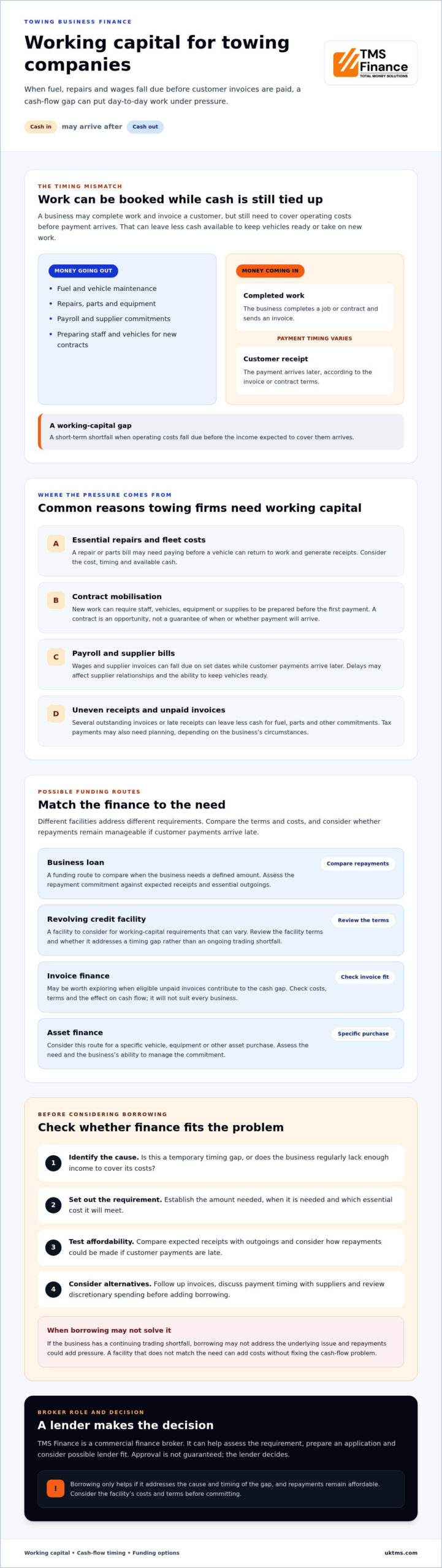
A towing company may need to pay for fuel, payroll, vehicle maintenance and supplier commitments before receiving payment for completed work. If customer receipts arrive later than expected, the business can be profitable on paper but have too little cash available to meet bills as they fall due. The pressure varies with the company’s costs, work and payment arrangements.
Working capital means funds available to meet short-term operating needs. It can help cover the gap between money going out and money coming in. The Working capital concept is also commonly discussed in relation to a business’s short-term assets and liabilities.
How towing work can create timing gaps
Fuel and wages are regular costs, while repairs and parts can bring unexpected bills. Suppliers may also expect payment on agreed dates. Income from an invoice or contract can arrive later than those outgoings. Because payment timing varies between customers and agreements, a company’s cash position can tighten even while work is being completed.
Illustrative scenario: A towing firm completes contracted work and sends an invoice, but payment is not yet due. Before the money arrives, the firm must pay staff and buy fuel for scheduled jobs. The work may generate income, but the bills still have to be managed in the meantime.
When a temporary gap becomes a business concern
When available cash is tight, an owner may have to prioritise payments or reconsider whether planned work can proceed. Delayed supplier payments may affect working relationships, while a lack of operating cash can make it harder to keep vehicles ready for jobs. The impact depends on the size and duration of the gap, the company’s reserves and its incoming payments.
A working-capital gap is a short-term shortfall when operating costs fall due before the income expected to cover them arrives.
A temporary timing mismatch is different from a continuing trading problem. If the business regularly lacks enough income to cover its costs, borrowing may not address the underlying issue, and repayments could add pressure. Compare expected receipts with essential outgoings and available cash to understand which situation applies. That distinction helps show whether funding may fit the need.
Top reasons towing companies may need working capital
The top reasons towing companies need working capital often involve a necessary cost arriving before the related work has generated cash. The right response depends on the expense, expected income and ability to manage repayments. Working capital may help meet an operational need, but it is important to assess the cost and affordability before using borrowing to support growth.
Fleet costs, repairs and contract mobilisation
A vehicle repair or equipment purchase may need to be paid for before the vehicle or asset can return to work and generate receipts. If the expense is essential to keep scheduled services running, compare the available cash with the cost and timing of any suitable finance. Optional upgrades or fleet expansion call for a separate assessment of demand, ongoing costs and the business’s ability to repay.
New work can also require upfront preparation. A firm may need to allocate staff, prepare vehicles and equipment, or arrange supplies before completing the first job. Illustrative scenario: a towing business agrees to take on additional contracted work, but must prepare another vehicle and roster staff before receiving payment. The contract creates an opportunity, but does not guarantee when or whether payment will arrive.
Payroll, suppliers and uneven receipts
Wages and supplier invoices may fall due on set dates, while customer payments depend on invoice and contract terms. Delayed receipts or several outstanding invoices can leave less cash for fuel, parts, payroll and other commitments. Tax payments may also need to be planned for, depending on the business’s circumstances. Separate essential costs from discretionary spending, and check how reliable expected receipts are before taking on borrowing.
Invoice finance may be worth exploring if eligible unpaid invoices are contributing to the gap. Check the facility’s terms, costs and effect on cash flow. It will not suit every business or resolve a wider trading problem. Improving invoice follow-up or discussing payment timing with suppliers may also help, without adding borrowing.
Growth and recruitment can increase pressure too. Before adding staff, stock or vehicles, estimate the upfront and ongoing costs, when income is likely to arrive and whether the business could manage repayments if work or payment is delayed. TMS Finance can help clarify a funding requirement and consider possible lender and facility fit through its accessible routes. Read about the business loan application process to understand what may be involved.
Which working-capital finance options could suit a towing business?
Choose a funding route by considering why the shortfall has arisen, how long it may last and how the business expects to repay. A one-off repair has a different cash-flow pattern from recurring gaps caused by the timing of customer receipts. No option is right for every business. Availability, costs and terms depend on the applicant, facility and lender’s assessment.
Match the funding route to the cash-flow need
A business loan may suit a defined funding requirement where the business can plan for scheduled repayments. A revolving credit facility may be worth considering if short-term needs vary and the business needs access to funds as required. Check the facility’s terms and forecast the effect of repayments before proceeding.
Invoice finance may be an option if eligible unpaid invoices are contributing to the gap. Its availability and structure depend on the lender’s assessment and terms. It is not suitable for every business or invoice. Consider how the facility would affect cash flow, what it costs and what obligations it creates.
For a specific vehicle or equipment purchase, asset and equipment finance may be relevant. A merchant cash advance may be worth exploring if the business receives relevant card-processing income. Check the costs, repayment basis and effect on future cash flow rather than assuming either option will fit.
Compare repayment, costs and security before deciding
Before accepting an offer, review the total cost, fees, repayment structure and term, along with any security or personal guarantee. Check whether repayments are fixed or linked to business receipts, and whether expected cash flow could support them if customers pay late. Rates and terms vary by applicant and facility. If finance is secured against an asset or property, that security could be at risk if repayments are not maintained.
Business loans are one possible route, but the right fit depends on the purpose, affordability and lender criteria. TMS Finance can help clarify the requirement and consider facilities available through its accessible routes. Review any offer carefully before committing. The top reasons towing companies need working capital can point to different funding routes, so compare the terms with the actual cash-flow need rather than choosing by product name alone.
How to decide whether borrowing is suitable for your towing company
Before considering finance, establish whether the pressure is a temporary timing gap or a continuing shortfall. The reasons cash is tight do not, on their own, show whether borrowing is affordable or appropriate.
Work through the decision in order:
- Identify the cause: Is the gap linked to a repair, contract mobilisation, delayed customer receipts or regular operating expenses?
- Set the amount and timing: Calculate how much is needed and when. Avoid borrowing more than the business can justify.
- Map the repayment route: Identify which receipts or trading income are expected to support repayments, and when they should arrive.
- Test affordability: Include existing borrowing and regular commitments in a realistic cash-flow forecast. Consider what happens if a customer pays later than expected.
Questions to answer before approaching a broker
Be ready to explain what the funds will pay for, when they are needed and how the business expects to repay them. A forecast should include expected receipts, operating costs and current finance commitments, not just the best-case trading scenario. If repayments depend on uncertain income, or borrowing would add pressure without resolving a persistent trading problem, finance may not be suitable.
Consider practical alternatives. The business might improve invoice collection, discuss payment timing with suppliers or defer non-essential spending. These steps will not fit every situation, but may reduce the size or duration of a cash gap without adding borrowing. If the issue is ongoing, review costs and income with an accountant or another appropriate professional.
Information a funder may request
Depending on the facility and lender, an application may require recent business bank statements, filed accounts or recent management accounts, and details of existing borrowing. A cash-flow forecast can explain how the proposed funding would be used and repaid. Aged debtor and creditor reports may show what customers owe and which supplier payments are due.
Lenders may consider trading history, bank conduct, credit profile, existing borrowing and affordability. These are possible considerations, not universal rules or an eligibility guarantee. A lender’s decision depends on the applicant’s circumstances, business performance, security where relevant and its own criteria. A commercial finance broker can help organise the requirement and prepare information for consideration, but cannot override a lender’s assessment.
Next steps: explore working capital with a commercial finance broker
Once you have identified the cash-flow issue, set out the requirement before exploring finance. Whether the need relates to a vehicle expense, contract mobilisation or delayed customer receipts, be clear about the amount, timing and likely repayment route.
What to prepare for an initial discussion
Explain what the funding would pay for, when it is needed and what outcome you are seeking. Gather available business financial information and details of current borrowing. A cash-flow forecast can show expected income, operating costs and how repayments might fit alongside existing commitments. The information required depends on the facility and lender.
If the decision involves tax, legal or accounting matters, seek advice from a suitably qualified professional. A broker can help with the funding process, but does not replace professional advice in those areas.
Discuss possible funding routes with TMS Finance
TMS Finance is a commercial finance broker, not a lender. Its process starts by understanding the requirement and reviewing headline information. TMS Finance can help organise documents, prepare an application, consider possible lender and facility fit through its accessible routes, and help explain offer terms if an offer proceeds.
A lender assesses each application against its own criteria. Approval and completion are not guaranteed, and timing depends on the case and lender. Before accepting an offer, review the repayments, costs, term, security and any personal guarantee. If borrowing does not appear affordable or the underlying trading issue remains unresolved, consider alternatives before proceeding.
To discuss your requirement, explain how much you need, what it will be used for and when it is required. TMS Finance can assess which options may be worth exploring, but cannot override lender criteria or promise an outcome.
TMS Finance is a commercial finance broker, not a lender. Finance is subject to status, lender criteria and satisfactory checks. Terms, fees, security and personal guarantees may apply. Contact TMS Finance to discuss your circumstances and the funding options that may be available.
Choose a funding route that fits your cash-flow gap
The top reasons towing companies need working capital include paying operating costs before customer receipts arrive, covering essential fleet repairs and preparing for new work. The right response depends on the cause, amount and timing of the shortfall. Business loans, revolving credit facilities, invoice finance or asset finance may be worth exploring, but borrowing will not suit every situation. Check affordability and consider practical alternatives before committing.
TMS Finance is a commercial finance broker and a member of the National Association of Commercial Finance Brokers. It can help clarify your funding requirement, prepare an application and review an offer if one proceeds. Approval and completion are not guaranteed, and lender criteria apply.
A clear view of your costs, expected receipts and repayment capacity can help you take a measured next step.
TMS Finance is a commercial finance broker, not a lender. Finance is subject to status, lender criteria and satisfactory checks. Terms, fees, security and personal guarantees may apply. Contact TMS Finance to discuss your circumstances and the funding options that may be available.
Frequently Asked Questions
Why might a towing company need working capital?
A towing company may need working capital when essential bills fall due before customer payments arrive. Fuel, payroll, vehicle repairs, supplier commitments and preparing staff or equipment for new work can all create short-term cash needs. These are among the top reasons towing companies need working capital, but pressures vary by business. A timing gap is different from ongoing trading losses, which borrowing may not resolve.
Can a towing company use invoice finance to manage cash flow?
Invoice finance may help a towing company access funds linked to eligible unpaid invoices, depending on the facility’s terms and lender assessment. It could be relevant if completed work has been invoiced but payment has not arrived. Check the costs, repayment arrangements and which invoices qualify. Availability is not guaranteed, and this option may not suit every business or resolve a wider cash-flow problem.
What information may a lender consider when a towing company applies for finance?
A lender may consider the funding purpose, trading history, bank conduct, credit profile, existing borrowing, security and how repayments are expected to be made. It may request recent business bank statements, filed or management accounts, a cash-flow forecast and details of current borrowing. Requirements vary by lender and facility. These factors are not universal rules, and meeting them does not guarantee approval.
Is borrowing suitable if a towing company has an ongoing cash-flow problem?
Not necessarily. If income is not covering regular operating costs, borrowing could add repayments without addressing the underlying issue. First review expected receipts, costs and existing commitments. Practical steps may include improving invoice collection, discussing payment timing with suppliers or delaying non-essential spending. A cash-flow forecast can help distinguish a temporary timing gap from a continuing shortfall. Consider professional advice where appropriate.
Can working-capital finance be secured against a towing vehicle or other asset?
Some finance arrangements may require security over an asset, but whether a towing vehicle can be offered, and on what terms, depends on the lender and facility. Ask which assets would be secured, what could happen if repayments are not maintained and whether a personal guarantee is required. A secured vehicle or other asset could be at risk if repayments are not maintained. Review all obligations before agreeing.
TMS Finance is a commercial finance broker, not a lender.