

Why should your business be forced to choose between acquiring the latest machinery and maintaining a healthy bank balance? Many UK firms find that the high upfront cost of essential equipment creates a financial burden that stalls growth. Understanding the benefits of asset finance is essential when you’re facing cash flow gaps or struggling with obsolete technology that slows down your operations. It’s a common challenge, but it doesn’t have to limit your progress.
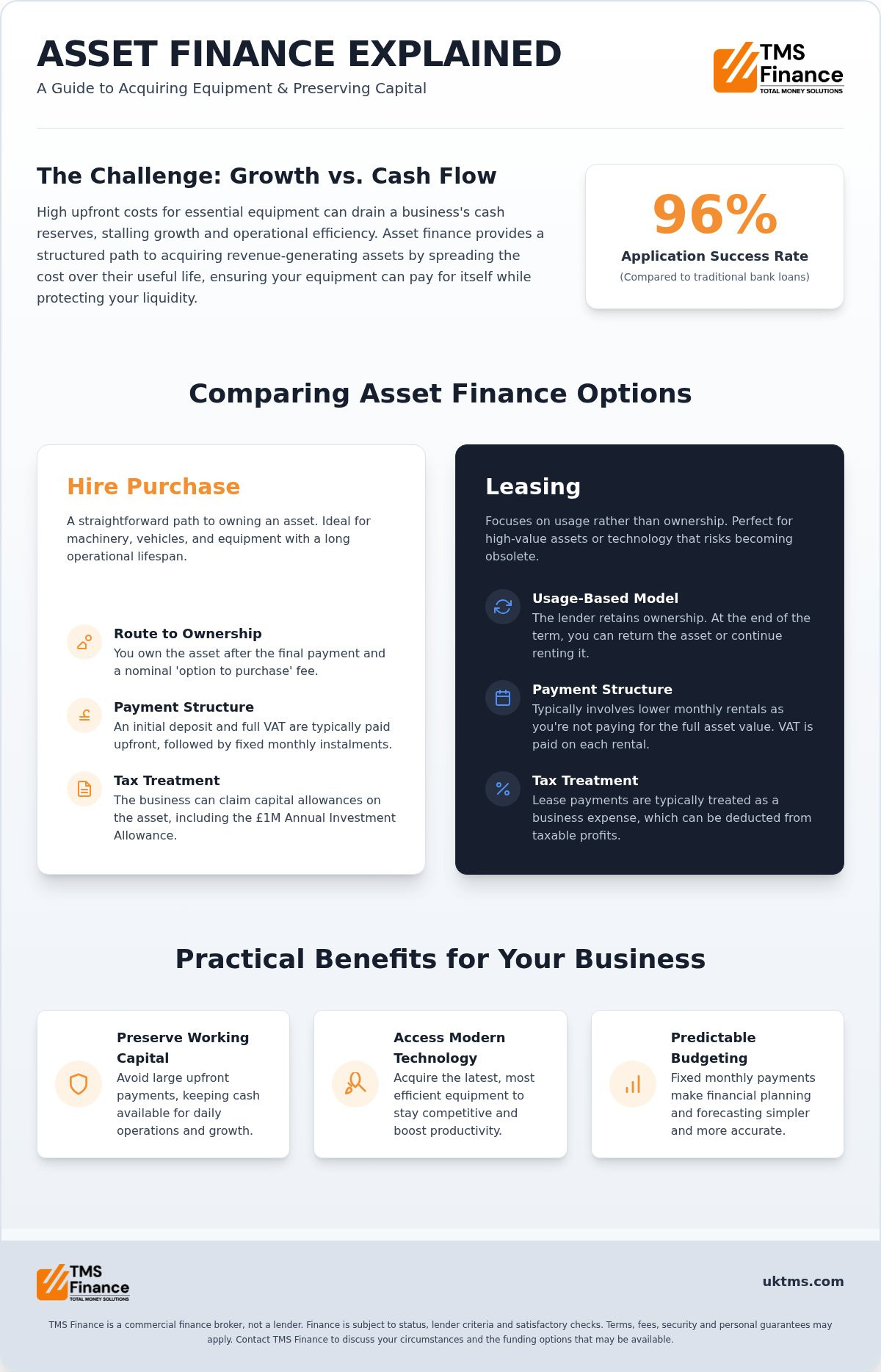
With a 96% application success rate compared to traditional bank loans, asset finance offers a reliable path to modernisation. This guide explains how you can preserve working capital and access modern technology through predictable monthly budgeting. We’ll examine various funding options, such as hire purchase and leasing, while highlighting how current tax incentives like the £1,000,000 Annual Investment Allowance can support your strategy. You’ll learn how to protect your liquidity while ensuring your business remains equipped for the future.
Key Takeaways
- Learn how to acquire revenue-generating equipment without depleting the cash reserves needed for your daily operations.
- Understand the fundamental differences between hire purchase and leasing to determine which model aligns with your ownership goals.
- Discover the practical benefits of asset finance for maintaining liquidity and accessing modern, efficient technology.
- Identify the specific financial documentation and credit standards required to meet lender eligibility criteria.
- Find out how a commercial finance broker helps package your application to identify a suitable lender fit from available options.
The Challenge of Asset Acquisition and Capital Expenditure
Large capital expenditures for revenue-generating assets often create a dilemma for UK business owners. Buying a new fleet or specialist machinery requires a substantial upfront payment. This immediate outflow can severely impact your cash reserves. When you use your own cash, you reduce the working capital available for payroll, rent, and daily operational costs. Maintaining a healthy cash buffer is essential for any business to stay resilient.
The consequences of delaying these purchases are equally damaging. Sticking with aging equipment often results in decreased efficiency and higher repair bills. If your competitors invest in newer, faster technology, you risk losing contracts. One of the key benefits of asset finance is the ability to acquire what you need now while spreading the cost over the asset’s useful life. This ensures your equipment pays for itself as it works.
When Outright Purchase May Be Unsuitable
Relying solely on cash reserves for asset purchases often compromises your financial resilience. Businesses facing seasonal trading patterns must retain liquidity to manage quieter periods. Depleting your reserves for a one-off purchase leaves you vulnerable to unexpected market shifts. It also prevents you from taking advantage of sudden growth opportunities that require quick liquidity.
There is also the issue of depreciation. Assets like IT hardware or specialist vehicles lose value quickly. A Finance lease allows you to use modern equipment without the risk of being stuck with an obsolete asset. By choosing finance over purchase, you avoid the burden of ownership for items that will soon need replacing.
The Role of Commercial Finance in Business Growth
Commercial finance provides a structured way to manage growth. It allows you to match the funding duration to the specific lifespan of the asset. This means your monthly payments are predictable and easier to manage. One of the main benefits of asset finance is that it keeps your existing bank credit lines, such as overdrafts, free for other essential business needs.
Utilising asset finance solutions helps maintain long-term stability. It removes the pressure of large capital outlays while ensuring your team has the best tools for the job. Working with a professional broker like TMS Finance provides a safe pair of hands during this process. We help package your application to meet specific lender criteria, ensuring you can focus on your core operations while we handle the complexities of identifying a suitable funding fit.
Comparing Asset Finance Structures: Hire Purchase and Leasing
Choosing the right funding structure depends on whether you want to own the equipment or simply use it for a set period. This choice is central to the benefits of asset finance, as it allows you to align your funding with your long-term business strategy. While some firms prefer the stability of an asset on their balance sheet, others value the flexibility of regular upgrades through leasing. Each model has distinct implications for your cash flow and tax position.
Key Features of Hire Purchase
Hire Purchase is a straightforward route to ownership. You typically pay an initial deposit and the full VAT amount at the start of the agreement. The remaining balance is then spread over a fixed term, usually between one and five years. Because the payments are fixed, budgeting becomes highly predictable. Once you pay the final instalment and a small “option to purchase” fee, the asset belongs to your business. This is often the preferred choice for machinery or vehicles with a long operational life.
Understanding Finance and Operating Leases
Leasing focuses on usage rather than ownership. In a finance lease, you use the asset for most of its functional life. You pay monthly rentals, and while you never technically own the asset, you might receive a share of the proceeds when the lender sells it at the end of the term. For a deeper look at these models, you can consult this guide to asset finance. It provides additional context on how these products differ from traditional bank loans.
Operating leases are different. They’re often used for high-value assets where the business only needs the equipment for a specific timeframe. Because the lender takes a view on the asset’s residual value, your monthly payments are often lower than with Hire Purchase. This structure is ideal for technology that risks becoming obsolete. You must return the equipment in good condition to avoid additional charges, making it a pure “pay-to-use” model.
Tax treatment varies between these options. Lease payments are often treated as a business expense, which can be efficient for your profit and loss account. Hire Purchase allows you to claim capital allowances instead. Every business is different, so it’s vital to speak with your accountant about these implications. If you’re ready to explore which structure fits your next project, you can start your application online to see the available options.
The Practical Benefits of Asset Finance for UK SMEs
The practical benefits of asset finance extend far beyond simple equipment acquisition. For UK SMEs, the primary advantage is the preservation of liquidity. By avoiding large capital outlays, you keep your cash reserves intact for other critical business functions. Fixed interest rates also provide a shield against market volatility. With the Bank of England base rate currently at 3.75% as of September 2026, having a fixed monthly commitment allows for more accurate long-term financial planning and protects your margins from future rate hikes.
Tax efficiency is another significant factor to consider. Depending on the agreement type, you may be able to offset your payments against taxable profits. This can lower your overall tax liability, though you should always seek professional advice to confirm the specific impact on your business accounts. Accessing higher-specification equipment through finance ensures your team remains productive without the stress of a single, massive invoice. Industry data suggests that Asset Finance can help you grow by improving operational efficiency and allowing for faster deployment of new technology.
Protecting Working Capital for Operations
Maintaining a healthy cash flow is essential for daily survival and sustainable growth. When you finance an asset, you retain cash that can be better spent on marketing campaigns, recruitment, or contract mobilisation costs. These are the areas that drive new revenue, whereas equipment is the tool that facilitates it. Spreading the cost ensures that the asset’s contribution to your profit happens in tandem with the payments.
Relying on short-term borrowing like overdrafts for long-term assets is often a strategic mistake. Asset finance matches the term of the funding to the life of the equipment, which is a much more stable approach. This structure prevents cash flow crises when tax or VAT bills arrive. Your capital remains available for these mandatory commitments rather than being tied up in a vehicle or machine that depreciates over time.
Asset Finance in Construction and Property
In the construction sector, the need for heavy plant, specialized machinery, and commercial vehicle fleets is constant. These assets are expensive and essential for fulfilling high-value contracts. One of the specific benefits of asset finance in this industry is how it allows experienced operators to scale their toolkits alongside their project pipeline without taking on excessive personal risk. It provides the flexibility to upgrade to more fuel-efficient or compliant machinery as regulations change.
Equipment funding often works alongside property development finance to provide a complete funding solution for site-based projects. While property finance covers the build and land costs, asset finance ensures you have the excavators, cranes, or site vehicles needed to execute the work. This integrated approach provides a safe pair of hands for developers who need to manage complex logistical and financial challenges simultaneously. It ensures that every part of the project is funded by the most appropriate financial product.
Eligibility, Documentation, and Financial Risks
Lenders evaluate your ability to maintain repayments over the entire agreement term. They focus on three main pillars: your trading history, bank conduct, and credit profile. A strong credit history suggests reliability, while your bank statements reveal your daily cash management habits. One of the unique benefits of asset finance is that the equipment itself acts as the primary security for the funding. This structure often makes finance more accessible than an unsecured loan, as the lender has a tangible asset to recover if the business defaults.
The evidence required for an application is comprehensive. You’ll need to provide your latest filed accounts from Companies House and up-to-date management accounts. These documents allow the lender to assess your current profitability and affordability beyond your last year-end figures. They also require the last three to six months of business bank statements to verify consistent cash flow and ensure there are no issues such as returned direct debits or exceeding agreed overdraft limits.
Preparing a Credible Finance Application
A professional application requires precision and transparency. You must provide a formal quotation or pro-forma invoice from a reputable supplier. Lenders need to verify the asset’s specifications, serial numbers, and value to ensure it meets their internal criteria. It’s also beneficial to provide a brief rationale for the purchase, explaining how the asset will generate new revenue or improve operational efficiency. One of the practical benefits of asset finance is that it allows you to upgrade your capabilities without depleting your cash reserves. Using a structured business loan application process helps you organise these details, ensuring your request is presented as a credible and well-planned investment.
Understanding the Risks and Obligations
Asset finance involves significant legal and financial obligations. The most immediate risk is repossession; if you fail to maintain repayments, the lender can take the asset back. This can cause immediate operational failure if the machinery is central to your workflow. Most lenders will also require a personal guarantee from the company directors. This makes you personally responsible for the outstanding balance if the business is unable to meet its commitments.
Because this is a form of secured borrowing, both your business stability and director assets are linked to the agreement’s performance. If you’re unsure about the terms, you should seek independent legal or financial advice. Working with a broker like TMS Finance provides a safe pair of hands to help you understand these requirements and identify a suitable lender fit. All funding is subject to status, affordability, and the lender’s specific criteria.
How TMS Finance Supports Your Funding Requirement
Securing the right funding requires more than just a basic application. While the benefits of asset finance are significant for growth, the process of identifying a suitable lender among various options is complex. TMS Finance acts as a safe pair of hands, guiding you through the initial assessment to ensure your specific business objectives are understood before any proposal is submitted. We focus on the timing of your requirement and the specific logistical challenges of your industry, such as seasonal trading or contract mobilisation.
Before you make a final decision, we ensure you understand the main terms and obligations of any potential agreement. This includes a clear explanation of any personal guarantees or security requirements that a lender may request. We believe in transparency, ensuring that the funding fits your long-term stability rather than just providing a short-term fix. This methodical approach is designed to instill confidence in your financial strategy and help you avoid unnecessary risks.
The Value of Specialist Brokerage
Specialist brokerage provides a structured path to completion. As a member of the National Association of Commercial Finance Brokers (NACFB), TMS Finance focuses on creating a credible presentation of your business to potential funders. We assist in gathering the necessary filed accounts and bank statements mentioned earlier, ensuring your application meets specific lender criteria. This support reduces the administrative burden on your team and allows you to maintain focus on your core operations.
Our role involves packaging complex requirements for a clear presentation. We don’t just look at the asset; we look at how that asset generates revenue for your business. By focusing on your objectives rather than just financial products, we help identify a possible lender fit from the options available through our network. This proactive approach ensures that all necessary information is ready for the funder, which helps streamline the assessment process.
Next Steps for Your Business
Your financial requirements may evolve as your project pipeline grows. It’s practical to review your existing borrowing regularly to ensure it still aligns with your cash flow plans. If you are facing high upfront costs for new contracts, you should consider if your current facilities provide enough flexibility. One of the long-term benefits of asset finance is its ability to scale with your business, but it must be part of a wider, integrated financial strategy.
In some cases, asset-specific funding may not be the only solution required. You might consider alternatives such as invoice finance to manage broader working capital needs and bridge gaps between completed work and client payments. Contact TMS Finance to discuss your circumstances and the funding options that may be available for your next project. We are ready to deploy our expertise to help you solve your logistical and financial headaches.
TMS Finance is a commercial finance broker, not a lender. Finance is subject to status, lender criteria and satisfactory checks. Terms, fees, security and personal guarantees may apply. Contact TMS Finance to discuss your circumstances and the funding options that may be available.
Securing Your Business Growth with Asset Finance
It’s a strategic advantage to acquire essential equipment without depleting your cash reserves. By spreading the cost, you protect your working capital and maintain the liquidity required for daily operations. Whether you choose hire purchase for ownership or leasing for flexibility, the primary benefits of asset finance lie in the stability and predictability it provides to your monthly budgeting.
TMS Finance acts as a safe pair of hands throughout this process. As a member of the NACFB with a specialist focus on the SME and property sectors, we prioritise your commercial objectives. We help package your application to meet lender criteria, ensuring you understand all obligations before proceeding. Investing in modern technology is a proactive move that helps your business stay competitive.
We look forward to supporting your next project and helping you manage your logistical requirements with confidence.
TMS Finance is a commercial finance broker, not a lender. Finance is subject to status, lender criteria and satisfactory checks. Terms, fees, security and personal guarantees may apply. Contact TMS Finance to discuss your circumstances and the funding options that may be available.
Frequently Asked Questions
What types of assets can be financed through asset finance?
Most revenue-generating assets with a clear resale value can be financed. Common examples include commercial vehicle fleets, construction plant, and heavy machinery used in manufacturing. One of the key benefits of asset finance is its versatility, covering items from IT infrastructure and office furniture to specialised agricultural equipment. If the asset is essential for your operations and has a predictable lifespan, it’s likely that a funding option can be explored.
Do I need a large deposit for Hire Purchase agreements?
Deposit requirements vary depending on the lender’s criteria and your business’s financial profile. In a typical Hire Purchase agreement, you’re usually required to pay the full VAT amount upfront, along with a percentage of the asset’s purchase price. This initial payment reduces the total amount borrowed and demonstrates your commitment to the agreement. We recommend discussing your cash flow requirements early so we can identify a possible lender fit that aligns with your capital.
Can new or start-up businesses apply for asset finance?
Younger companies and start-ups can apply, though lenders often view them as higher risk due to a lack of trading history. For these businesses, lenders may request additional security, such as a personal guarantee from the directors or a larger initial deposit. Providing a clear business plan and evidence of relevant industry experience can help strengthen your application. While not every lender serves new businesses, options may be available for experienced operators starting new ventures.
How long does the asset finance application process take?
The completion time for an application depends on the complexity of the case and the specific lender’s internal processes. Straightforward requests for standard vehicles or machinery can often be processed within a few business days. More complex requirements involving specialised equipment or property-related assets may take longer to assess. Having all your documentation, such as recent bank statements and asset quotations, ready for review will help streamline the process and avoid unnecessary delays.
Is a personal guarantee always required for business asset finance?
A personal guarantee isn’t a universal requirement, but it’s frequently requested by lenders when financing assets for SMEs or younger businesses. This guarantee provides the lender with additional security, making the directors personally responsible for the debt if the business defaults. The requirement often depends on your company’s credit profile, the value of the asset, and the lender’s risk assessment. We always ensure you understand these obligations before you commit to a final decision.
What happens to the equipment at the end of a finance lease?
At the end of a finance lease, you don’t automatically own the equipment. You typically have three options: return the asset to the lender, sell it to a third party and retain a portion of the proceeds, or enter a secondary rental period for a nominal annual fee. Understanding these end-of-term obligations is one of the benefits of asset finance, as it allows you to plan for equipment replacement without the burden of disposing of obsolete machinery.
TMS Finance is a commercial finance broker, not a lender. Contact TMS Finance to discuss your circumstances and the funding options that may be available.