
A lower monthly repayment can ease pressure on working capital, but it may increase the total amount your business pays. To reduce monthly business loan repayments UK businesses can review their existing terms, consider refinancing or compare other funding options. The right approach depends on cash flow, affordability and the full cost of borrowing.
When repayments limit spending on wages, suppliers or planned investment, it can be tempting to focus only on the next payment. But delaying a review can leave less room to meet essential costs. Agreeing to a lower payment without checking the terms could also mean borrowing for longer, paying extra fees or putting assets at risk.
This guide covers practical ways to manage repayments, including reviewing loan terms, refinancing, revolving credit, invoice finance and working-capital finance. It explains how to compare monthly affordability with total cost, security and repayment obligations, and what information to prepare before discussing options. TMS Finance helps businesses assess their funding requirements, prepare applications and review offer terms. A lower monthly payment is not automatically a better deal: the aim is to find an arrangement that fits your circumstances and remains manageable over time.
Key Takeaways
- To reduce monthly business loan repayments, UK businesses can review current terms, explore refinancing or consider other facilities, depending on their circumstances.
- A longer repayment term may lower regular payments, but it can extend the borrowing period and increase the total repayment.
- Compare affordability with the full cost, fees, repayment period and any security before agreeing to a change.
- Prepare a cash-flow forecast, details of current borrowing and relevant business records for a repayment review.
- TMS Finance can assess your funding requirement, review information and support an application to lenders available through its routes.
Why reducing monthly business loan repayments matters for UK cash flow
Loan repayments leave the business on set dates, whether customer payments have arrived or not. When cash is tight, that commitment can leave less available for payroll, suppliers, stock or investment. The issue is not just the loan balance. It is whether enough working capital remains to keep day-to-day operations on track.
Before looking at how to reduce monthly business loan repayments, establish what is causing the pressure. A lower payment may provide breathing room, but it could extend the borrowing period or change the total amount repaid. The goal is to improve cash flow without overlooking the longer-term cost.
How loan repayments can squeeze business cash flow
Sales and incoming invoices can vary, while a scheduled loan payment remains due. If a customer pays late, cash intended for a repayment may be needed for wages or a supplier instead. A short-term timing gap is different from an ongoing affordability problem, where income may not reliably cover regular costs and debt commitments.
Repayment pressure is the strain a fixed loan payment places on cash needed to meet the business’s other commitments.
That distinction matters. A temporary gap may call for closer cash-flow planning. An ongoing shortfall may need a wider review of costs, trading performance and borrowing. If the underlying issue is not addressed, putting off a review can leave less flexibility when upcoming commitments fall due.
Business loans can fund different needs, and their repayment arrangements vary. The general Business loan overview provides background on the purpose and types of borrowing. For your business, focus on how the current commitment compares with expected income and essential outgoings.
What to establish before changing a repayment arrangement
Check the current balance, payment amount, remaining term and any other obligations in the loan agreement. Note payment dates and whether the borrowing is secured or includes a personal guarantee. Read the agreement carefully and speak with relevant professional advisers about the implications before agreeing to a change.
For wider context on borrowing options, the UK business loan guide can help you understand the application process. Also map expected income and commitments so any repayment review is based on a realistic view of cash flow, not just the next payment date.
Be clear about the outcome you need. Is the difficulty limited to a particular period, or does the regular payment remain unaffordable even when trading is on plan? Your answer can help frame whether a review of terms or another funding route is appropriate. Assess any proposed change against immediate affordability and the obligations it creates over time.
Reducing monthly business loan repayments: routes
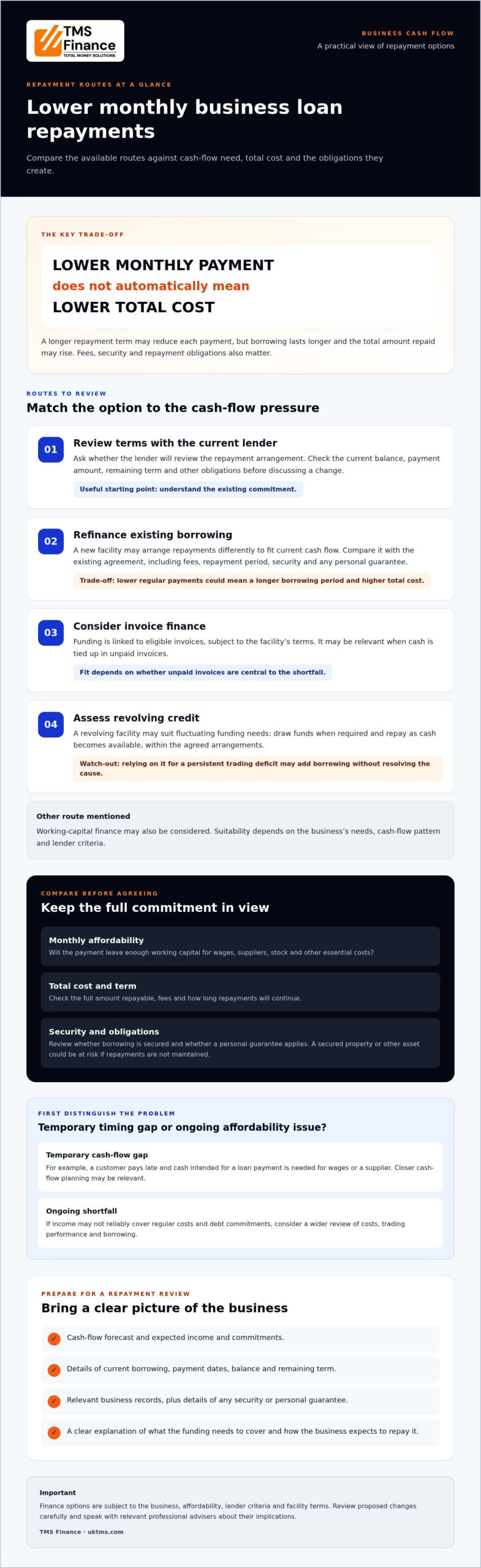
Once you understand what is driving the pressure, compare options against the specific cash-flow problem. The existing lender may consider changing terms or restructuring repayments. Refinancing replaces the current borrowing with a new facility. These routes are not automatic, and a lower regular payment does not necessarily mean a lower overall cost. Check how each option affects both the immediate budget and future obligations.
When refinancing or changing loan terms may be worth exploring
Ask the current lender whether it will review the repayment arrangement. Alternatively, refinancing may replace existing borrowing with a facility that fits the business’s current cash flow differently. A longer repayment term can reduce each payment, but repayments continue for longer and the total cost may rise. A new facility could also involve fees, different terms, security or a personal guarantee.
Compare the proposed arrangement with the existing agreement before proceeding. Check how fees affect the total amount repayable, whether security would change and what happens if the business cannot maintain repayments. If a property or other asset secures the borrowing, it could be at risk if payments are not maintained. Review the terms with relevant professional advisers where needed. Refinancing is one possible route, not a guarantee of savings.
When another cash-flow facility may fit better
Refinancing may not address the underlying timing issue. If cash is tied up in unpaid invoices, invoice finance options for a business tax bill may be worth assessing. It provides funding linked to eligible invoices, subject to the facility’s terms. A revolving credit facility may suit fluctuating funding needs: funds can be drawn when required and repaid as cash becomes available, within the agreed arrangements.
These facilities create repayment obligations and may have costs, conditions or security requirements. Suitability depends on the business, its cash-flow pattern and lender criteria. Invoice finance is most relevant when unpaid invoices are central to the shortfall, rather than when the business has a continuing gap between income and outgoings. A revolving facility also needs careful control. Relying on it for a persistent trading deficit may add to borrowing without resolving the cause.
Before considering another facility, define the amount needed, what it will cover and how the business expects to repay it. If loan and other debt commitments are becoming difficult to manage, Business Debtline for free debt advice offers support to small business owners and self-employed people. This can help you consider debt concerns separately from arranging new commercial finance.
TMS Finance can review your funding requirement and consider possible facility fit from routes available to the broker. To explain the amount, purpose and timing of your requirement, use the business loan application process as a starting point for a discussion. Any application remains subject to lender assessment and criteria.
Compare the real cost, risks and suitability before lowering a payment
A lower monthly payment can make the budget easier to manage, but it does not show the full cost of a finance arrangement. Compare your current borrowing with the proposed balance, repayment period, payment schedule and total obligations. Test whether revised payments remain affordable across the full term, not just over the next few months.
Questions to compare any revised repayment arrangement
Review the offer alongside your current agreement. Check how long repayments will continue, whether fees apply and whether early repayment carries costs or conditions. Identify any changes to security or personal guarantees. Rates and terms vary by applicant and facility, so a lower payment alone is not enough to establish whether a proposal suits your business.
- Total repayment: What is the full amount payable over the term, including fees and any new borrowing?
- Payment structure: How much is due, when are payments due, and does the schedule fit your cash-flow forecast?
- Security and guarantees: Is an asset or property being offered as security, or is a personal guarantee required?
- Existing obligations: What happens to the current facility, including early repayment terms and other commitments?
These questions help distinguish a genuine improvement in affordability from a payment reduction that pushes obligations further into the future. If a loan is secured, the property or asset used as security could be at risk if repayments are not maintained. A personal guarantee can also create personal exposure for the person giving it, according to its terms. Read the relevant documents carefully and consider professional advice before making a material financial decision.
Compare like with like. If a proposal combines existing borrowing with additional funds, separate the cost of refinancing from the cost of the new borrowing. Check which obligations will end, which will continue and what the business will owe under the new arrangement. Ask for an explanation of anything you do not understand before agreeing.
When borrowing may not be a suitable answer
New borrowing may not solve persistent affordability problems. If regular income cannot cover operating costs and debt commitments, refinancing or extending a term may postpone the pressure rather than address its cause. Consider whether the issue is a timing gap or an ongoing shortfall before taking on another repayment obligation.
Review the business’s cash-flow forecast and identify areas to examine, such as operating costs, debtor collection and the timing of supplier payments. This can help clarify whether pressure comes from delayed receipts, spending patterns or a wider trading issue. If the forecast remains negative, more borrowing could add costs and commitments without creating a sustainable repayment plan.
No single option suits every business. Lenders assess applications against their own criteria, which may include the applicant’s circumstances and the facility requested. Consider the full obligations, not just the next payment, and seek appropriate financial, legal or accounting advice where relevant.
Prepare a repayment review: information and practical steps
A useful repayment review starts with accurate figures, not an assumed solution. Prepare a clear picture of current borrowing, cash flow and the outcome you need. This helps keep discussions focused on the actual repayment pressure and makes it easier to compare any proposal with existing commitments.
- Map current borrowing. List each facility, its outstanding balance, payment amount, payment dates, remaining term and any security or guarantee.
- Forecast cash flow. Set out expected income and committed outgoings, including when money is due to arrive and leave the business. Use realistic assumptions and account for changes in trading.
- Define the outcome. Be specific about the payment level the business can manage, when pressure occurs and whether the need is temporary or ongoing.
- Gather supporting records. Bring together relevant bank statements, accounts, forecasts and details of existing borrowing.
Build a clear picture of current borrowing and affordability
Include all business facilities, not only the loan causing immediate pressure. Record balances, repayment obligations, agreed terms and any security attached to each facility. A cash-flow forecast should show timing as well as totals, so it is clear whether receipts are expected before key payments fall due.
Lender assessments vary by case and facility. Criteria and information requests differ. Preparation helps explain the position, but cannot guarantee an outcome.
Present the requirement and supporting documents clearly
When discussing the requirement, state the amount needed, its purpose and timing, and the repayment outcome you are seeking. Explain what is driving the pressure and how a proposed arrangement would fit expected cash flow. Be open about other borrowing and any changes that could affect income or outgoings.
A lender may request documents for a UK business loan application, including recent business bank statements, filed or management accounts, VAT returns, cash-flow forecasts and details of existing borrowing. Depending on the facility and application, it could also ask for aged debtor or creditor reports, director identification and proof of address. These are common examples, not a universal document list. Keep records current, consistent and easy to follow, and explain unusual entries so the figures can be understood in context.
Organising this information can support a focused discussion with TMS Finance. As a commercial finance broker, TMS Finance reviews funding requirements, helps prepare information and considers possible lender and facility fit from routes available to it. The business loan application process provides a practical starting point for presenting your circumstances and supporting records.
How TMS Finance can help explore repayment options
Working out how to reduce monthly business loan repayments takes more than finding a lower figure. The revised arrangement must fit the business’s cash flow and remain workable over time. TMS Finance is a commercial finance broker, not a lender. It helps businesses assess their funding requirements and consider options that may be available through its lender routes.
What happens when you discuss repayment pressure
Start by explaining the amount you owe, the payments currently due and how they affect the business. Describe what the funds were used for, when the pressure arises and what repayment outcome you need. Clear information helps frame the requirement and assess whether a review of existing terms, business debt refinancing or another facility may be worth exploring.
TMS Finance reviews the information, helps prepare an application where appropriate and considers possible lender and facility fit from the routes available to it. If an offer is made, you can review its costs, terms, security, guarantees and repayment obligations before deciding whether to proceed. TMS Finance is a member of the National Association of Commercial Finance Brokers (NACFB).
There is no guaranteed outcome. Lenders assess applications under their own criteria. The applicant’s circumstances, business performance, credit profile, affordability and any security may affect the decision. Checks and the details of the case can also affect whether finance proceeds and the timing. A broker can support the process but cannot promise approval or a completion date.
Decide on a next step without assuming more borrowing is right
Consider any proposed facility alongside current obligations and alternatives. If a revised payment depends on borrowing for longer, adding security or giving a personal guarantee, weigh those commitments against the cash-flow relief. If the difficulty reflects a continuing gap between income and outgoings, review the underlying forecast and business costs before taking on further debt.
Use the information you have gathered to make a measured decision. Compare proposed terms with the existing agreement and seek appropriate professional advice where the decision has significant financial, legal or accounting implications. You are responsible for deciding whether an offer suits the business.
Take a considered next step for your business
Deciding how to reduce monthly business loan repayments starts with a clear view of what the business can afford and what any change will mean over time. Use your figures to define the outcome you need, then assess whether a revised facility would support cash flow without adding obligations the business cannot comfortably meet.
If more borrowing would not address the cause of the pressure, pause and consider non-borrowing steps or seek appropriate professional advice. There is no need to proceed unless the costs, risks and terms make sense for your circumstances.
A measured review can help you decide what to do next. If your business needs funding for cash flow, equipment, stock, growth or property, contact TMS Finance. Explain how much you need, what it will be used for and when it is required, so TMS Finance can assess which options may be worth exploring.
Frequently Asked Questions
Can I reduce my business loan repayments without refinancing?
Yes. You can ask your current lender whether it will review the existing arrangement. Possible changes depend on the lender and your agreement. Get any revised terms in writing, including the new payment schedule and obligations. Do not simply pay less than agreed without contacting the lender, as missed or short payments may have consequences under your agreement.
Will extending a business loan term reduce the total amount I repay?
Not necessarily. A longer term spreads repayments over more time and may reduce each scheduled payment, but it does not automatically reduce the total amount repaid. Interest and applicable fees may increase the overall cost. Compare the full repayment amount and the date the borrowing would be cleared with your current arrangement, rather than judging the change by the monthly payment alone.
Is refinancing a business loan always a good way to lower repayments?
No. Refinancing may change the monthly payment, but the new facility could have a longer term, different costs or new security requirements. It may also combine borrowing and increase the total amount owed. Compare the proposed offer with your current loan, including fees and early repayment terms. If income cannot support the business’s commitments, refinancing may only postpone the affordability problem.
What documents might a lender request when reviewing business finance?
A lender may ask for recent business bank statements, filed or management accounts, VAT returns, a cash-flow forecast and details of existing borrowing. Depending on the facility and application, it could also request aged debtor or creditor reports, director identification and proof of address. Requirements vary, so treat this as a guide, not a fixed checklist. Keep copies clear and ensure figures are consistent.
What happens if my business cannot keep up with loan repayments?
Contact the lender as soon as you are concerned and explain the position. Missed payments may lead to action under the agreement and could affect the business’s ability to obtain finance later. If the loan is secured, the lender may enforce its rights over the asset or property if repayments are not maintained. Review the agreement and seek appropriate professional advice. Do not assume new borrowing is the only answer.
TMS Finance is a commercial finance broker, not a lender. Finance is subject to status, lender criteria and satisfactory checks. Terms, fees, security and personal guarantees may apply. Contact TMS Finance to discuss your circumstances and the funding options that may be available.