

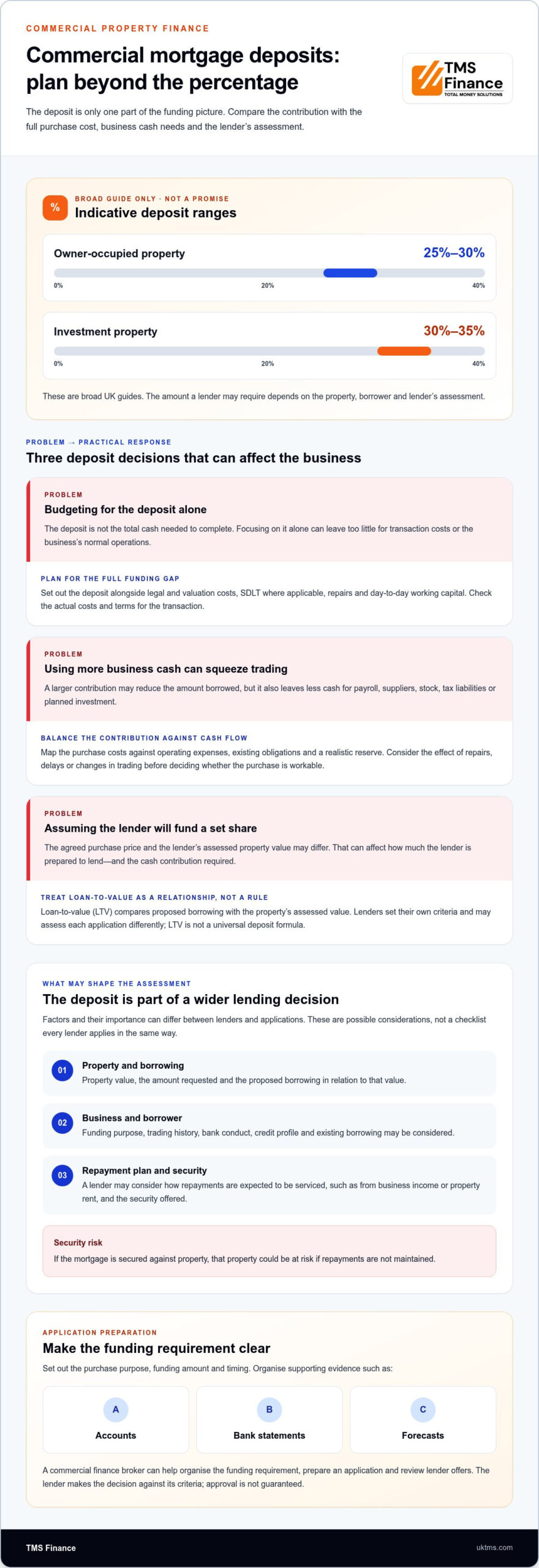
The deposit a lender may accept isn’t necessarily the amount your business can comfortably afford. In the UK, commercial mortgage deposit requirements can vary: owner-occupied purchases may typically need around 25% to 30%, while investment properties may require around 30% to 35%. These are broad guides, not guarantees. The right figure depends on the property, borrower and lender’s assessment.
Focusing only on the cash needed to complete can leave too little for legal and valuation costs, SDLT where applicable, repairs and day-to-day working capital. A sound plan accounts for the full funding gap, the evidence a lender may request and the risks of secured borrowing.
This article explains what may influence the deposit, how to prepare your figures and documents, and what alternatives could be worth considering if the contribution would strain cash flow. TMS Finance is a commercial finance broker that can help organise a property funding requirement, prepare an application and review lender offers. The lender makes the decision based on the application and its criteria.
Key Takeaways
- Commercial mortgage deposit requirements uk can vary with the property, purpose and borrower profile. Treat any percentage as a guide, not a promise.
- Understand how loan-to-value and other lender assessment factors may affect the contribution you need to provide.
- Compare using business cash with other suitable funding routes, considering repayments, fees, security and the effect on cash flow.
- Set out the purchase purpose, funding amount and timing, then organise evidence such as accounts, bank statements and forecasts.
- A commercial finance broker can help structure the funding requirement, prepare application evidence and review lender offers, but cannot guarantee approval.
Why commercial mortgage deposit requirements can affect your business plans
Buying premises can tie up a substantial share of available business cash before the property starts supporting your plans. If you focus only on the deposit a lender may require, you could underestimate the total funds needed to complete the purchase or leave too little for normal operations. Plan the contribution alongside cash flow to judge whether the transaction is workable, not just affordable on paper.
A commercial mortgage deposit is the buyer’s contribution towards the purchase price. The proposed mortgage funds the balance. There is no universal fixed percentage: the contribution a lender may require depends on its assessment of the borrower, business and property. Commercial mortgage deposit requirements uk therefore describe a range of lending decisions, not one standard figure for every purchase.
What does a commercial mortgage deposit cover?
The deposit is the part of the purchase price you provide rather than borrow under the proposed mortgage. The lender considers the amount requested in relation to the property and the funding application. This Commercial Mortgage in the UK reference gives a general overview of the structure and terminology.
The deposit is only one part of the transaction budget. It doesn’t represent the total cash needed to complete the purchase, which may also include other transaction costs and funds to prepare or operate from the premises. Work out the full requirement before treating the deposit as your only cash commitment. Review assumptions against the actual terms and costs for the transaction.
Why can putting in more cash create a business trade-off?
Using more business cash for the deposit may reduce borrowing, but it also leaves less available for payroll, suppliers, stock, tax liabilities or planned investment. The business may also need a reserve for unexpected repairs, delays or changes in trading. Weigh the cash contribution against foreseeable operating needs.
For example, a business planning a move may need funds for both the purchase and the practical costs of fitting out or running new premises. If most available cash goes towards the deposit, less may remain for those commitments. This is an illustrative example: the effect depends on the business’s finances and the property transaction.
There is no single balance that suits every buyer. A lower cash contribution could mean seeking more borrowing, while a larger contribution could put greater pressure on working capital. The lender’s assessment may also affect the amount available to borrow, so plan the deposit as part of the wider funding requirement.
Before making commitments, map the purchase costs against operating expenses, existing obligations and a realistic reserve. If the figures leave little room for normal trading or unexpected costs, pause and reassess the timing, funding structure or suitability of the purchase. This can help prevent a property plan from weakening the business it is meant to support.
How lenders may assess a commercial mortgage deposit requirement
A deposit decision is usually part of a wider assessment of the borrowing, property and people or business behind the application. Lenders may consider the amount requested compared with the property’s assessed value, as well as how the business expects to repay the mortgage. The factors considered, and the weight given to each, can differ between lenders and applications.
How property value and loan-to-value relate to the deposit
Loan-to-value, or LTV, describes the proposed borrowing as a proportion of a property’s assessed value. The lower the borrowing relative to that value, the more the buyer generally contributes towards the purchase. LTV describes the relationship; it is not a deposit rule. Lenders set their own criteria and may assess each application differently.
The agreed purchase price and a lender’s valuation are separate figures, and they may not match. If they differ, the lender’s assessment could affect how much it is prepared to lend and, in turn, the cash the buyer needs to contribute. Don’t assume the proposed mortgage will cover the same proportion of the agreed price as it would of the lender’s assessed value.
Which business and borrower details may shape the assessment?
Alongside the property, a lender may consider the funding purpose, trading history, bank conduct, credit profile and existing borrowing. It may also look at who is responsible for the business, relevant property or sector experience, the security offered and the proposed repayment route. These are possible considerations, not a checklist every lender applies in the same way.
A clear repayment plan explains how the borrowing is expected to be serviced. Depending on the case, this may involve income from the business or rent from a property. Existing commitments may affect the business’s capacity to meet new repayments. If the mortgage is secured against property, that property could be at risk if repayments aren’t maintained.
The deposit assessment is case-specific and depends on the lender’s criteria. No single factor or deposit level applies universally. A strong position on one point won’t necessarily outweigh concerns elsewhere, and a lender’s view may change as it reviews the application and supporting evidence.
The FCA’s Mortgage and Home Finance: Conduct of Business sourcebook provides regulatory information within its defined scope. It does not set a universal deposit requirement for commercial mortgages, so it shouldn’t be treated as a guide to the contribution a particular lender will require.
For a lender discussion, organise a concise picture of the purchase, proposed borrowing, business finances, existing commitments and repayment plan. TMS Finance’s business loan application process explains the information involved in preparing a finance application. TMS Finance can review a property funding requirement and consider lender fit from options available through its routes. The application remains subject to assessment and lender criteria.
Compare deposit funding sources, costs, and risks before committing
Once you have estimated the contribution, compare possible funding sources and their effect on the business. Using cash avoids adding a separate loan, but may reduce the reserve available for trading. Borrowing may preserve some cash, but adds repayments and may involve fees or security requirements. Assess each source for affordability and suitability, not just whether it can provide funds in time.
Using business cash or another funding facility
Available cash can provide a direct contribution without creating a new borrowing commitment. That doesn’t make it automatically preferable: using too much may leave the business short of funds for regular costs or unexpected needs. Business loans, working capital finance or property-related borrowing may be considered in some cases, but borrowing for a deposit creates an additional repayment obligation alongside the mortgage.
Before comparing facilities, test repayments against realistic cash-flow forecasts. Consider fees, the full repayment terms and whether security is required. Rates and terms vary by applicant and facility, so don’t rely on a general figure when planning. If borrowing is secured against property or another asset, that security could be at risk if repayments aren’t maintained.
| Funding source | Potential benefit | Key risk | Evidence to review |
|---|---|---|---|
| Available business cash | No separate borrowing repayment is added. | May reduce funds for operations, commitments or unexpected costs. | Cash-flow forecasts, upcoming liabilities and a realistic operating reserve. |
| Business borrowing | May provide funds while retaining some cash in the business. | Adds repayments and may involve fees, security or personal guarantees. | Facility terms, affordability forecasts, existing borrowing and security details. |
| Property-backed borrowing | May release funds against suitable property equity, subject to assessment. | Creates secured debt; the property could be at risk if repayments aren’t maintained. | Property information, proposed repayment plan, costs and existing secured lending. |
For commercial mortgage deposit requirements uk, compare the complete funding plan, not just the amount available at completion. If you consider a separate facility, check that its repayments remain manageable alongside the mortgage, other commitments and expected trading needs. Approval for one facility doesn’t guarantee that another lender will accept the overall structure.
When a commercial mortgage may not be suitable
Pause if affordability is uncertain, the business may not have enough capacity to meet repayments, or using cash would deplete operating reserves. Depending on the circumstances, delaying the purchase, choosing a smaller property or restructuring the transaction may be more appropriate than borrowing now.
Compare the proposed costs and obligations with the business’s financial position before committing. Seek legal, tax or accounting advice from an appropriately qualified professional where those questions affect your decision. A commercial finance broker can help organise the funding requirement and consider facility fit, but proceed only if you understand the risks and repayments.
Plan the deposit and prepare a credible commercial mortgage application
A clear funding plan connects the property purchase to the business’s finances. Before making commitments, set out the purpose of the purchase, the amount needed, when funds may be required, the proposed contribution and the outcome you expect. This gives you a basis for discussing commercial mortgage deposit requirements uk and identifying which figures still need evidence.
Build a clear view of the cash requirement
Separate the intended deposit from other purchase and project commitments. Depending on the property, these could include transaction costs, repairs, fit-out work or other costs required before the premises can support the business. Record which funds are available, where they are held and whether using them would leave enough cash for ordinary trading.
Compare the expected outlay with cash-flow forecasts and upcoming supplier, tax, payroll and operational commitments. Allow for unexpected costs rather than assuming every available pound can go towards the purchase. Identify when funds may be needed, but don’t assume a completion date until the transaction timetable is established. If the figures put pressure on working capital, revisit the contribution or overall plan before proceeding.
Organise the evidence lenders may request
Prepare consistent business and property information. Lenders’ requests vary with the case and their criteria, so use this as a starting point rather than a fixed checklist. Commonly requested documents and details may include:
- Recent business bank statements, filed accounts and current management accounts.
- Cash-flow forecasts showing expected income, operating costs and the effect of proposed repayments.
- Details of existing borrowing, regular commitments and any security already in place.
- Property details, agreed purchase information and valuation material available for the application.
- Planning documents and cost schedules if the proposal involves works or development.
- Evidence supporting the repayment route or exit plan, where relevant to the facility being considered.
Check that your accounts, forecasts and application information tell the same story. Explain unusual movements or changes in trading clearly, and make sure forecasts reflect known commitments rather than optimistic assumptions. For property-related costs, distinguish confirmed figures from estimates. This helps the lender understand the request and identify anything that needs clarification.
For a broader view of property funding, use a relevant commercial property finance guide alongside your transaction documents. TMS Finance can review the funding requirement, help organise application evidence and consider lender fit from options available through its routes. Its business loan application process explains the information involved in preparing a finance application. Any offer depends on the application and relevant lender criteria.
How TMS Finance can help you assess commercial mortgage deposit options
Working out a property funding requirement involves more than estimating a deposit. TMS Finance is a commercial finance broker, not a lender. It can help organise the information, consider lender and facility fit from options available through its routes, and support you while the application is assessed.
What broker support can and cannot do
The process starts with a discussion about the property, purpose, funding amount and intended timing. TMS Finance can assess the headline information, identify documents that may be needed and help prepare a clear application. The aim is to present the business and transaction accurately, not to make the figures appear stronger than they are.
As the application progresses, the broker can help respond to lender queries and support you in reviewing the offer’s commercial terms and obligations. This can clarify what the proposed facility involves, including repayments, fees, security and any personal guarantee. Read the terms carefully and seek professional advice on legal, tax or accounting matters where needed.
The lender makes the decision. TMS Finance cannot override lender criteria or guarantee approval or completion. It considers options available through its routes and does not claim access to every lender. The lender will assess the applicant, business performance, credit profile, affordability and security against its own criteria. Clear presentation can explain a case, but it cannot replace evidence or resolve an underlying affordability issue.
What to do next if you are considering a property purchase
Before discussing the requirement, gather a preliminary funding amount, the intended use of the property, likely timing and any available property details. Also consider how much your business could contribute and what it needs to retain for trading. These details give the funding discussion a practical starting point without assuming a completion date or lender decision.
For wider context on funding a business property purchase, review the commercial property finance guide alongside your plans. TMS Finance can help organise the requirement, prepare documents and consider lender fit from options available through its routes. Commercial mortgage deposit requirements uk depend on the full application and the lender’s assessment, so treat early discussions as planning, not confirmation of an offer.
Share the amount, purpose and timing of your proposed purchase with TMS Finance to discuss the funding requirement.
Make your next property funding decision with clarity
Before committing to a purchase, set out what the business can contribute and what it needs to retain for trading. This gives you a practical basis for assessing commercial mortgage deposit requirements uk and deciding whether the property fits your plans.
Use that funding picture to identify gaps or commitments that need further review. If the figures are uncertain, take time to clarify them before proceeding. A measured decision can help you move forward or recognise when a different approach is needed.
A clear plan is a sound starting point for your next property decision.
Frequently Asked Questions
How much deposit do I need for a commercial mortgage in the UK?
There’s no single deposit amount for every commercial mortgage. The contribution depends on the property, proposed borrowing, business and lender’s criteria. Treat any early estimate of commercial mortgage deposit requirements uk as provisional until the lender has assessed the application and property information. Before making an offer or other commitment, model the deposit alongside purchase costs and the cash your business needs to keep operating.
Can I borrow money to fund a commercial mortgage deposit?
Possibly, but the mortgage lender may want to understand where the contribution comes from, and additional borrowing affects overall affordability. A separate business loan, for example, could preserve cash in the short term but would add repayments and possibly fees or security obligations. Disclose the proposed funding structure and assess both facilities together. Approval for one facility doesn’t mean another lender will accept the arrangement.
What happens if the lender’s valuation is lower than the purchase price?
A lower valuation may reduce the amount a lender is prepared to offer, leaving you to cover a larger gap or reconsider the purchase. You may need to contribute more cash, renegotiate or pause if the lender’s assessment doesn’t support the borrowing you expected. The lender’s approach depends on its criteria and the case. Ask your solicitor about contractual options before changing or withdrawing from a purchase.
Can a personal guarantee replace a commercial mortgage deposit?
Don’t assume a personal guarantee will replace the deposit. It may be requested as an additional commitment, but it doesn’t itself provide the purchase funds. Whether a lender requires one, and how it affects the proposal, depends on its assessment and terms. Read any guarantee carefully and get independent legal advice before signing so you understand the obligations and potential consequences for you personally.
Can I get my commercial property deposit back if the purchase falls through?
That depends on how the payment was made, the contract terms and the circumstances in which the transaction ends. A deposit paid under a purchase contract may be treated differently from money held on account or another payment. Don’t assume it will automatically be returned. Ask your solicitor to explain the relevant terms before paying, including what may happen if finance, valuation or another part of the transaction does not proceed.
TMS Finance is a commercial finance broker, not a lender. Finance is subject to status, lender criteria and satisfactory checks. Terms, fees, security and personal guarantees may apply. Contact TMS Finance to discuss your circumstances and the funding options that may be available.