

Replacing a business vehicle can solve an operational problem while creating a cash-flow one. For SMEs, commercial fleet financing solutions need to match how vehicles are used, what the business can afford to repay and whether ownership matters. Paying upfront may tie up working capital needed for wages, stock or day-to-day costs. Delaying a replacement could affect reliability, capacity or planned work.
The right funding route depends on the purpose of the vehicles and the business’s finances. Asset finance, a business loan and working-capital finance have different repayment structures, security requirements and uses. A lower initial outlay does not necessarily mean a better fit over the full term.
This guide compares the main routes and explains the costs, security and risks to consider. It also covers the information a lender may assess and the documents that can support an application. TMS Finance is a commercial finance broker. It can help clarify the requirement, consider possible lender fit through its accessible routes, and explain key terms before you decide whether to proceed.
Key Takeaways
- Match commercial fleet financing solutions for SMEs to vehicle use, cash flow and ownership priorities.
- Compare asset finance, business loans and working-capital finance by their repayment structure, security and obligations.
- Test the full proposed commitment against realistic cash-flow forecasts, existing borrowing and possible changes in trading.
- Prepare details of the vehicles, funding requirement and business finances to support a clear application.
- TMS Finance can help assess your requirement, consider possible lender fit and explain key terms before you decide.
Why commercial fleet financing matters when vehicle needs pressure SME cash flow
Replacing a vehicle, expanding a fleet or preparing for a new contract can require a sizeable outlay just when the business also needs cash for payroll, suppliers and daily operations. Using available funds may reduce reserves. Delaying a decision can affect capacity, reliability or the ability to deliver contracted work, particularly if an existing vehicle is no longer fit for its role.
Commercial fleet finance is funding considered for vehicles used by a business. A lender assesses each application, and the suitable route depends on the requirement, the business’s circumstances and the facility terms. Fleet management includes planning how vehicles are acquired and used, so finance is only one part of a wider operational decision.
For some SMEs, paying from available cash may be more appropriate. For others, spreading the cost could help retain working capital, but repayments create an ongoing commitment. Vehicle and commercial fleet finance is one route to consider, not an automatic improvement on using cash. Compare the options against the business’s actual cash position and plans.
When does a fleet requirement become a financing decision?
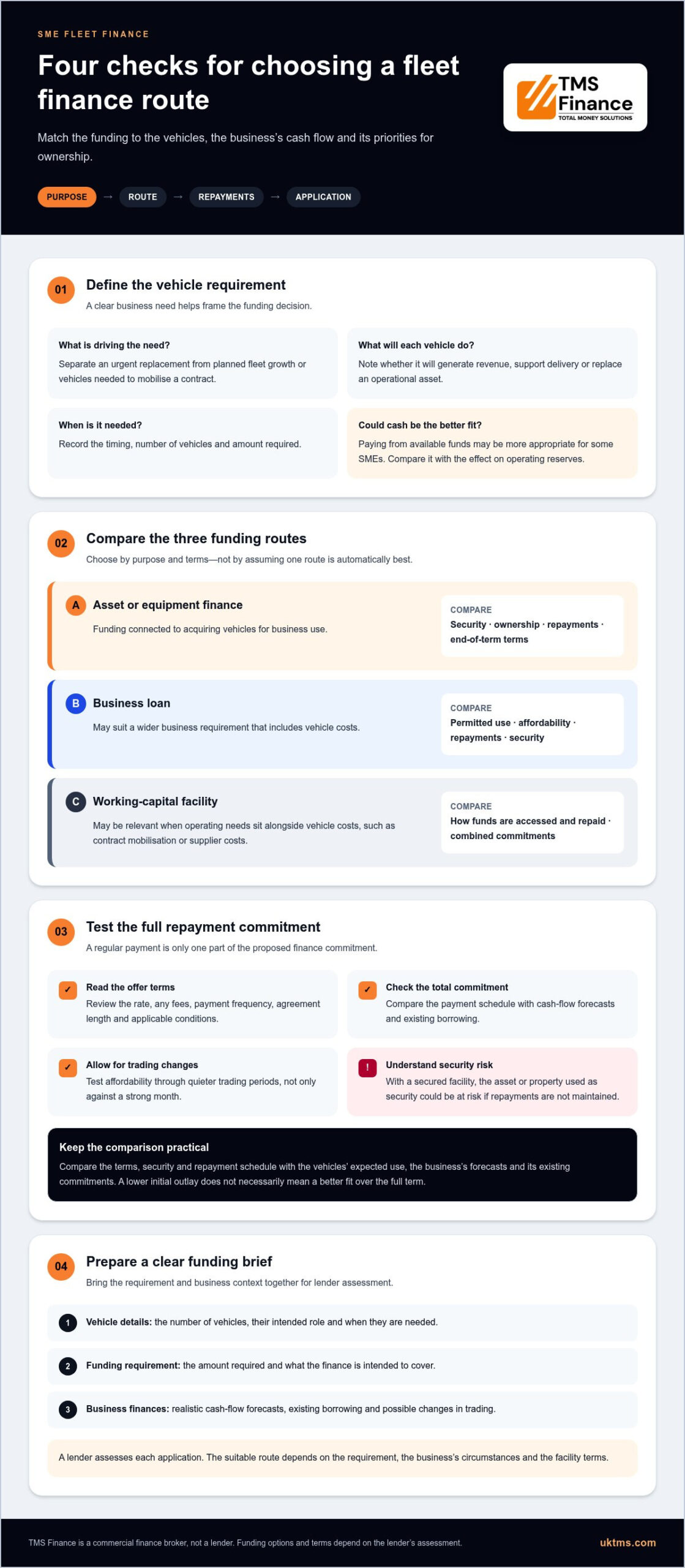
Separate an urgent replacement from planned fleet growth or vehicles needed to mobilise a contract. For each vehicle, note its intended role: will it generate revenue, support delivery or replace an operational asset? Record the timing, number of vehicles and amount required. This creates a clear funding brief and connects the request to a business need.
How could funding affect working capital?
Finance may leave more cash available for operating needs, but repayments must fit alongside existing commitments. Test affordability against realistic cash-flow forecasts, including quieter trading periods, rather than relying on a strong month. Retaining reserves can matter when unexpected operating costs arise. Compare the full repayment commitment with the cash the business would otherwise use upfront.
These are the core questions behind commercial fleet financing solutions for SMEs: what vehicles are needed, when are they needed, and how will funding affect day-to-day resilience? Setting out those details helps frame a practical discussion without assuming borrowing is the right answer.
Commercial fleet financing solutions for SMEs: compare the main routes
Choose a funding route based on whether the requirement is specifically to acquire vehicles or includes wider business needs. Asset finance is linked to an asset. A business loan or working-capital facility may suit a broader purpose. The proposed terms determine the repayment obligations, security and ownership position.
| Funding route | Possible use | Points to compare |
|---|---|---|
| Asset or equipment finance | Funding connected to acquiring vehicles for business use. | Security, ownership, repayment structure and end-of-term terms. |
| Business loan | A wider business requirement that may include vehicle costs. | Permitted use, repayment obligations, affordability and any security. |
| Working-capital facility | Operating needs alongside vehicle acquisition, such as mobilisation costs. | How funds are accessed and repaid, and how commitments fit together. |
When might vehicle-linked asset finance fit?
Asset finance may be worth considering when funding is directly tied to purchasing vehicles that support business activity. The vehicle or another asset may be required as security, depending on the facility. Ownership arrangements, repayment structures and end-of-term terms vary. Read the specific offer rather than assuming the business will own the vehicle at a particular point.
When might a business loan or working-capital facility fit?
A business loan may suit a requirement that combines vehicles with other business costs. Working-capital finance may be relevant when operating commitments sit alongside a vehicle purchase, such as contract mobilisation or supplier costs. In either case, match the funding purpose to the facility and consider how repayments will be met. No route is automatically cheaper, faster or more suitable. If repayments are not maintained under a secured facility, the asset or property used as security could be at risk.
Compare the proposed terms, total commitment, security and repayment schedule against the business’s forecasts and existing borrowing. The right option depends on the purpose, affordability and lender’s terms. TMS Finance can review the requirement and consider possible lender fit through its accessible routes.
To explore relevant business finance products, review the available categories. You can also set out the purpose, amount and timing of your requirement through the business finance application.
How to assess fleet finance costs, security and repayment risk
Assess a finance offer as a full commitment, not just by its headline rate or regular payment. The terms show what the business would owe, when payments fall due and what happens if circumstances change. Compare those obligations with the vehicles’ expected use and the cash available to meet them.
What costs and obligations should an SME review?
Read the proposed terms carefully. Review the rate, any fees, repayment frequency, agreement length and applicable conditions. Check the total commitment and payment schedule against cash-flow forecasts, existing borrowing and likely trading fluctuations. A payment that appears manageable in a typical month may put pressure on the business if income falls or operating costs rise.
Consider the full period of the agreement, not only the initial outlay. Are the vehicles expected to remain useful throughout the term? Could the business still meet repayments if a contract ends, demand changes or an unexpected cost arises? Use figures from the actual proposal. An illustrative calculation is not a quote and does not confirm what a lender may offer.
How do security and personal guarantees affect risk?
Depending on the facility and lender, security or a personal guarantee may be required. Establish which assets would secure the borrowing, who may be asked to give a guarantee and what obligations the documents set out. If repayments are not maintained, an asset or property used as security could be at risk. A personal guarantee may also create obligations for the guarantor. Review the terms and seek legal advice if you are unsure what signing would mean.
Commercial fleet financing solutions for SMEs should be judged against affordability as well as operational need. A lender may consider the applicant, business performance, credit profile, affordability and security, among other factors. These are not universal rules. Do not treat an application or initial discussion as confirmation that funding will be offered on particular terms.
When might borrowing not be suitable?
If realistic forecasts do not show a reasonable way to meet repayments, finance may add strain rather than solve a problem. Alternatives could include delaying fleet expansion, using available cash if sufficient operating reserves remain, or reassessing the number and type of vehicles needed. The right decision depends on the business’s circumstances.
Where the decision has tax, accounting or legal implications, seek advice from an appropriately qualified professional. TMS Finance can help explain proposed costs, security, guarantees and repayment obligations, but the business should understand the commitment before deciding whether to proceed.
Prepare a fleet finance requirement and application that lenders can assess
A clear funding brief explains why the vehicles are needed and how the business expects to meet the commitment. Prepare it in a logical order:
- Define the need: Explain whether the vehicles will replace existing assets, support growth or help deliver a contract.
- Estimate the funding requirement: Set out the number of vehicles and amount sought, based on the proposed purchase.
- Review cash flow: Show how repayments could fit alongside current borrowing and operating costs.
- Gather supporting evidence: Organise financial records and relevant vehicle or supplier details.
What information helps explain the fleet requirement?
State each vehicle’s purpose, intended use and required timing. Explain how the vehicles support business activity, such as delivering services or replacing operational assets. Summarise the amount requested, existing borrowing and expected repayment route. Supplier quotations or asset details can help explain the proposed purchase. Keep the information consistent across the application and supporting documents.
Which documents may be requested?
Depending on the business and facility, evidence may include recent business bank statements, filed accounts or management accounts, cash-flow forecasts and VAT returns. Lenders may also request details of existing borrowing or aged debtor and creditor reports. Treat this as preparation, not a fixed eligibility checklist. Provide current documents and explain significant changes or unusual entries clearly.
A lender may consider the funding purpose, trading history, bank conduct, credit profile and existing borrowing. These are possible considerations, not universal rules. The documents requested and the weight given to different information depend on the business, facility and lender. A complete, well-organised application can make the requirement easier to understand, but it cannot guarantee an offer.
For commercial fleet financing solutions for SMEs, TMS Finance can help review the requirement, organise supporting information and consider possible lender fit through its accessible routes. Businesses seeking help preparing an application can also use the business loan application page.
How TMS Finance supports SMEs exploring commercial fleet finance
Choosing a funding route is only part of the decision. The vehicle requirement also needs to be presented clearly, with a realistic view of the business’s finances and the obligations it could take on. TMS Finance is a commercial finance broker. It reviews the requirement and considers possible lender and facility fit through its accessible routes. It cannot override a lender’s assessment or guarantee approval or completion.
What does broker support involve?
The process starts with a discussion about the vehicles, their purpose, the amount required and the timing. TMS Finance then reviews the headline information, helps organise relevant documents and considers possible lender fit. If an application proceeds, it helps present the case and respond to lender queries.
This support helps bring the funding request and evidence together in a clear, consistent application. TMS Finance can also help you understand commercial terms, including costs, security, guarantees and repayment obligations, before you decide whether to proceed. Any offer remains subject to the lender’s assessment and the terms it sets.
TMS Finance is a member of the National Association of Commercial Finance Brokers. It considers options available through its accessible routes, not the whole market. You can review relevant business finance products to see the funding categories available.
What should an SME do next?
Before discussing commercial fleet financing solutions for SMEs, prepare the amount required, vehicle purpose and expected timing. It also helps to have current cash-flow information and details of existing borrowing ready. These details give the discussion a practical starting point and help clarify how proposed repayments could fit with the business’s commitments.
To set out your requirement, you can start a business finance application. Applying does not guarantee an offer. Review any proposed terms carefully and seek professional advice where you need tax, legal or accounting guidance.
TMS Finance is a commercial finance broker, not a lender. Finance is subject to status, lender criteria and satisfactory checks. Terms, fees, security and personal guarantees may apply. Contact TMS Finance to discuss your circumstances and the funding options that may be available.
Make your next fleet funding decision with confidence
The right commercial fleet financing solutions for SMEs depend on vehicle use, cash-flow capacity and ownership priorities. Compare the full repayment commitment and any security against realistic forecasts. If borrowing would put pressure on essential operating funds, consider alternatives such as delaying expansion or reviewing the vehicle requirement.
TMS Finance supports SMEs by assessing funding requirements, helping prepare applications and reviewing offers. Its membership of the National Association of Commercial Finance Brokers is a point of reference. As a broker, it can help organise the discussion and explain key terms, but the lender makes its own assessment.
Prepare the vehicle purpose, amount required, timing and current cash-flow information before discussing possible options. A clear brief can help make the conversation more focused.
Before committing, make sure the repayment obligations and risks are clear and consider whether the funding fits the business’s plans.
Frequently Asked Questions
What is commercial fleet financing for an SME?
Commercial fleet financing is funding considered to acquire or replace vehicles used by a business. SMEs can apply, but a lender assesses each application and approval is not guaranteed. Options can include asset finance linked to vehicles, a business loan or working-capital finance. Compare vehicle use, cash flow, ownership priorities and proposed terms before deciding whether a facility fits.
Which is better for a fleet, asset finance or a business loan?
Neither option is automatically better. Asset finance may suit a purchase directly connected to acquiring vehicles, with security, ownership and end-of-term terms depending on the facility. A business loan may cover a broader funding purpose. Compare the actual terms, repayment profile, security and total commitment with your cash flow and vehicle plans before deciding which route, if either, fits.
What documents may be needed for fleet finance?
A lender may request recent business bank statements, filed or management accounts, cash-flow forecasts and details of existing borrowing. VAT returns, aged debtor or creditor reports, and vehicle quotations or supplier invoices may also be relevant. Requirements depend on the business, facility and lender. TMS Finance can help organise evidence for an application, while the lender determines what information it requires.
How much does commercial fleet finance cost?
There is no single cost that applies to every business or facility. Review the actual offer, including its rate, any fees, repayment frequency, term and conditions. Compare the full commitment with expected vehicle use and realistic cash flow. Rates and terms vary by applicant and facility, so do not rely on assumed rates or an illustrative calculation as a quote. Check the offer before deciding.
Can fleet finance put business assets or directors at risk?
Yes, depending on the facility, security and guarantees involved. If a vehicle or other asset is used as security, it could be at risk if repayments are not maintained. A personal guarantee may create obligations for the director or another guarantor. Read the terms carefully to understand what is secured and who is responsible. Seek legal advice if you are unsure about the effect of any security or guarantee.
TMS Finance is a commercial finance broker, not a lender. Finance is subject to status, lender criteria and satisfactory checks. Terms, fees, security and personal guarantees may apply. Contact TMS Finance to discuss your circumstances and the funding options that may be available.